

Home
IDERHA in the spotlight Part 8: Nadja Kartschmit
In our interview series about the people that drive IDERHA, we spotlight Early Career Community member Nadja Kartschmit. Discover what Nadja's calling would have been outside research and what skill she would like to master in 24 hours.
Can you share some insights into the work you are doing in IDERHA (including your affiliation and WP)? And why is your work important?
I am a researcher at the Medical University of Vienna, primarily engaged in WP6 of the IDERHA project. Our focus is on developing consensus-based policy recommendations to enable responsible health data sharing for research. We organize stakeholder workshops with patients, researchers, and legal experts. I also monitor EU regulatory developments, such as the European Health Data Space and the AI Act, and provide insights to the consortium on their impact. Our overarching goal is to ensure that health data is used more effectively, responsibly, and to the benefit of all stakeholders.
Looking ahead five years, what profound impact do you envision your project will have on both your personal growth and the broader landscape of your field?
As an epidemiologist, I see enormous potential in data-sharing initiatives to address research questions that go beyond the scope of traditional clinical trials and enable to answer research questions more rapidly and less costly than cohort studies. The Framingham Cohort Study for example revolutionized public health by identifying key non-communicable disease risk factors. By leveraging diverse, large-scale data, real world data can uncover hidden risk factors and real-life outcomes without waiting decades for results and ultimately public health can be improved by translating research results into public health interventions. Through my work, I have also gained deep insights into the organizational, legal, and regulatory challenges of data access, and the critical need to balance stakeholder concerns with clear communication and robust frameworks.
If you were to deliver a TED talk, what would be the topic you'd choose, and why do you think it’s interesting enough for everyone to hear?
I would choose: “From Data to Dialogue: The Art of Science Communication.” Science is only as powerful as our ability to explain it. What do research findings actually mean, and how can we explain them in ways people truly understand? The COVID pandemic showed how vital it is to translate science and research results into clear, actionable messages for individuals and society. A TED talk could highlight strategies that build trust and bridge the gap between scientists and the public.
If the world of research hadn’t been your calling, what alternative career path do you think you might have taken? And why didn’t you take it?
Besides being a researcher, I am also a nurse, though I worked only briefly in the field, as I quickly realized during my studies that my real interest lies in research. Still, I greatly valued working with patients and would not want to miss that experience.
Share with us your ideal way to spend a day off, whether it's a thrilling adventure, a cozy retreat, or an exploration of something new and exciting.
I would love to spend the day outdoors with family and friends, hiking in the mountains or relaxing at the beach. In the evening, I imagine a nice dinner and music to round off the day.
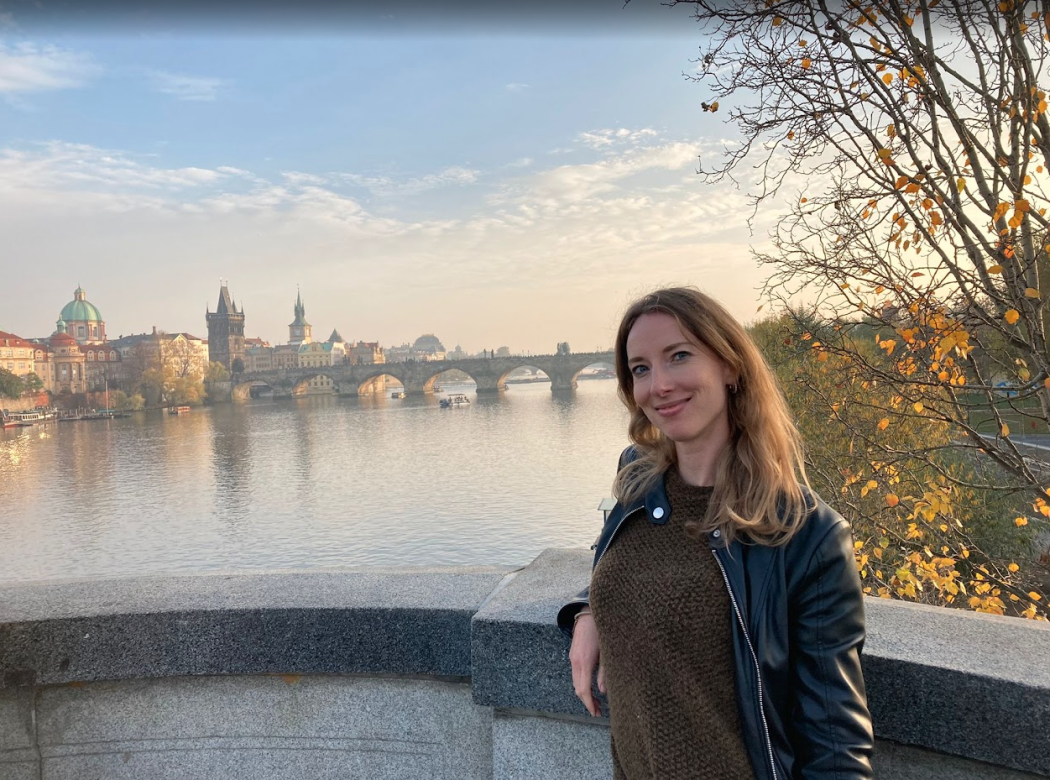
If you could have dinner with any three individuals, living or deceased, who would they be and why?
I would invite three inspiring women: my grandmother, I never met, but who nevertheless sparked my interest in medicine; Ada Lovelace, the visionary mathematician who wrote the world’s first computer program; and Isadora Duncan, the pioneer of modern dance who broke conventions, not only in arts, but also through her feminist spirit that challenged social norms of her era.
Dive into the world of science-related entertainment - what's your absolute favourite movie, TV series, or book, and why should everyone see or read it at least once?
Although not strictly science-related, one of my favorite books is One Hundred Years of Solitude by Gabriel García Márquez. Magical realism weaves together the miraculous and rational inquiry, making the extraordinary feel ordinary and blurring the boundary between scientific knowledge and a sense of mystery and wonder.
If you had the magical ability to master a new skill in just 24 hours, what skill would you choose and why?
I would love to master any language in just 24 hours. Languages have always interested me and as someone who loves to travel, it would be very practical too.