

Home
IDERHA in the spotlight Part 6: Rasmus Mølgaard Hansen
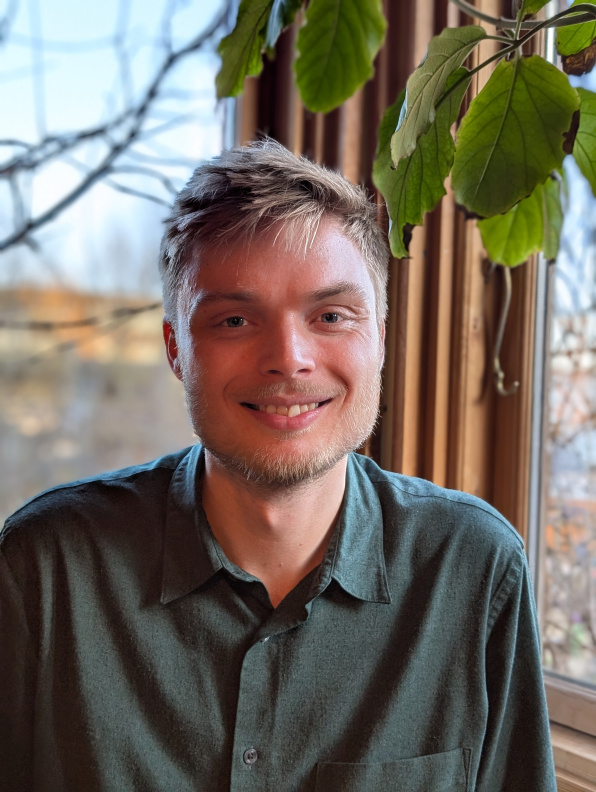
In our interview series about the people that drive IDERHA, we spotlight Early Career Community member Rasmus Mølgaard Hansen. You can read why he would give a TED talk on digitalization, how his ideal day off looks like and why he would like to have dinner with Dumbledore.
Can you share some insights into the work you are doing in IDERHA (including your affiliation and WP)? And why is your work important?
I work at DEFACTUM, a research and consulting department in the Central Denmark Region that specialises in public health research. I am a member of IDERHA's WP6 leadership team, where I contribute in a variety of ways. I help coordinate and prepare the IDERHA Data Access and Governance Committee (IDAGC) as part of Task 6.1, play a central role in Task 6.2, where we are finalising the final deliverable on policy gaps in data access and sharing, and contribute to broader WP6 activities.
In general, WP6 aims to strengthen health data governance policies by identifying key issues, developing recommendations, and facilitating regulatory discussions. We aim to ensure that data is used more effectively and responsibly in ways that benefit multiple stakeholders.
What motivates me the most is ensuring that various viewpoints are represented in these talks. Health data governance is more than complying with laws; it is also about trust, accessibility, and ensuring that data is used in ways that truly benefit patients and healthcare systems.
Looking ahead five years, what profound impact do you envision your project will have on both your personal growth and the broader landscape of your field?
Looking ahead, I see constant learning as an important element of my path at IDERHA. Everyday, I learn new things about health data governance, policy development, and multi-stakeholder engagement, and I expect this to continue over the next five years. Working on IDERHA has already broadened my perspectives, and I intend to continue developing my knowledge of health data policy, regulatory frameworks, and the balance of accessibility and ethical considerations.
On a broader level, health data is becoming increasingly crucial in improving healthcare systems. I hope that my work on WP6 helps to make health data more accessible and useful in a responsible way, whether that means assisting researchers to obtain the data they need for new treatments or ensuring that patients receive better care through improved data-sharing frameworks. If the work we are doing helps make health data policy more transparent, effective, and inclusive, I believe we will have made a significant difference.
If you were to deliver a TED talk, what would be the topic you'd choose, and why do you think it’s interesting enough for everyone to hear?
If I were to give a TED talk, I would discuss the complex and sometimes contradictory impact of digitalization. How it transforms our relations with institutions, making life easier for some while unintentionally creating new barriers for others.
While standardisation helps to streamline processes and improve accessibility, it also has an inherent exclusivity that can leave some people behind. The challenge is not whether to standardise, but rather how to find a balance between efficiency and inclusivity. Some degree of exclusion is unavoidable, but the key is recognising it and taking steps to mitigate its effects.
If the world of research hadn’t been your calling, what alternative career path do you think you might have taken? And why didn’t you take it?
If I had not gone into research, I would probably be working for an NGO or in user experience, focusing on making systems and processes more intuitive and accessible. Both paths align with my interest in helping people navigate complex structures, whether that is in health data, policy, or digital spaces.
A more far-fetched path, but one I find appealing, would be facilitating the production of art. Something is exciting about supporting creative processes by helping artists bring their work to life.
In the end, I chose research because it allows me to engage with important societal challenges while still working across different disciplines. But who knows, maybe one day I will find a way to combine all of these interests.
Share with us your ideal way to spend a day off, whether it's a thrilling adventure, a cosy retreat, or an exploration of something new and exciting.
My ideal day off would begin with meeting with friends and a cold dip in the sea, followed by the warmth of a sauna; the contrast is refreshing. Afterwards, we would sit in the small winter bathing clubhouse by the sea, enjoying a long, cosy breakfast while enjoying the view and chatting.
Afterwards, I would spend some time doing something like visiting an exhibition, going for a walk in nature, or just wandering through town, stopping wherever something catches my attention. In the evening, I would go out to dinner at a great restaurant and enjoy the good food, conversation, and relaxed atmosphere. To end the day, I would go to the little art cinema in town, a cosy, intimate space that always has something interesting on. Watching a movie together, discussing it afterwards, and simply enjoying the shared experience would be an ideal way to end the day.
If you could have dinner with any three individuals, living or deceased, who would they be and why?
If I could have dinner with any three people, I'd choose a combination of wisdom, personal connection, and insight into a completely different world.
First, even though he is fictional, I would choose Dumbledore. He is wise, thoughtful, and full of fascinating insights into power, morality, and human nature. I believe he would bring both deep conversations and a bit of humour to the table.
Second, I would like to invite my grandmother. She was a remarkable woman with a lot to say, and I would love to hear more of her ideas, stories, and wisdom now that I can fully appreciate them.
I have a difficult time deciding on the third person. As an anthropologist by training, I am torn between world leaders, academic legends, and ordinary people from a completely different way of life. Each would provide something unique insights into power and decision-making, ground-breaking ideas, or a viewpoint so different from mine that it would challenge how I see the world. Perhaps I would leave the last seat open and let chance determine who shows up.
Dive into the world of science-related entertainment - what's your absolute favourite movie, TV series, or book, and why should everyone see or read it at least once?
As a big movie lover, I could recommend many films, but one that has stayed with me long after watching is The Zone of Interest. It is one of the most unsettling and thought-provoking films I have seen in the past year, not because of what it shows, but because of what it chooses not to show.
The film takes place just outside Auschwitz, following the seemingly normal lives of a Nazi commandant and his family as they go about their daily routines. What makes it so powerful is its detached perspective, and how the horrors of the concentration camp remain largely unseen, yet their presence is felt in every frame. The sound design, in particular, is chilling, forcing the audience to listen to what is happening just beyond the walls of this idyllic home.
What makes The Zone of Interest such an important watch is how it forces us to confront the banality of evil, and the way atrocities can become background noise for those who choose to look away. It is a deeply uncomfortable but necessary reminder of human complacency, privilege, and moral blindness.
It is not an easy film, but it lingers, making you reflect long after the credits roll. If a movie can change the way you think about history, responsibility, and human nature, then I believe it is one worth watching.
If you had the magical ability to master a new skill in just 24 hours, what skill would you choose and why?
If I could instantly master any skill, I would choose to play the piano. Music has always been important to me, and in many ways, it feels like a language I understand but cannot speak. Being able to sit down and play would open up a whole new way of expressing and connecting with music. The piano is such a versatile instrument, whether playing alone, with others or just getting lost in a melody.