

Home
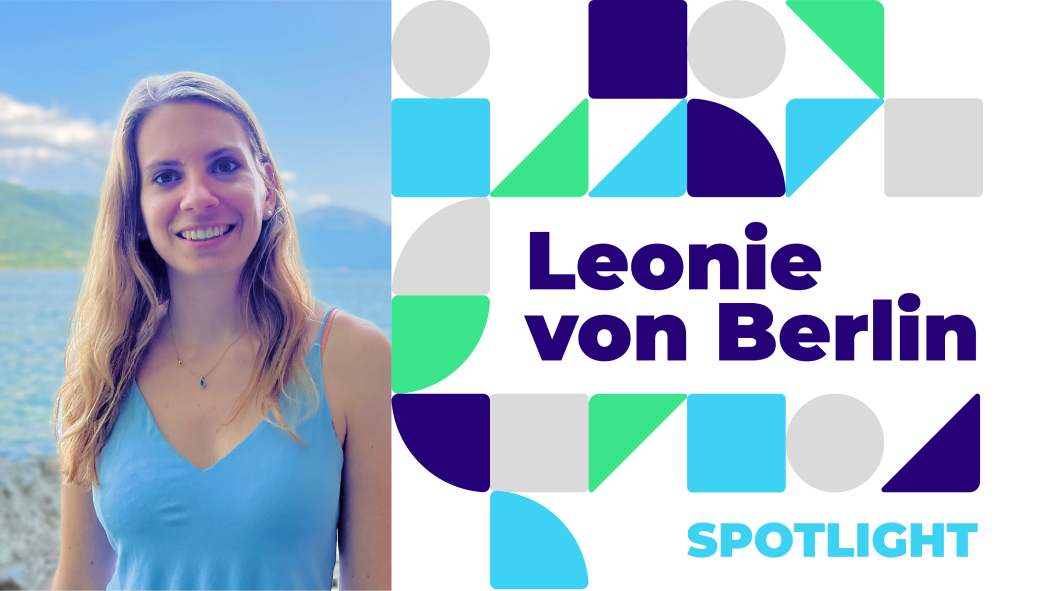
IDERHA in the spotlight Part 4: Leonie von Berlin
In our interview series about the people that drive IDERHA, we spotlight Early Career Community member Leonie von Berlin. Read about her interest in stress-related disorders, why she would like to have dinner with Simone de Beauvoir and her ideal way to spend the day off.
Can you share some insights into the work you are doing in IDERHA (including your affiliation and WP)? And why is your work important?
In November last year, I joined Fraunhofer ITMP in Hamburg as a data scientist and data manager, also becoming part of IDERHA Work Package 4 (Healthcare Data Standards and Interoperability). My role focuses on assessing whether the data used in the project comply with the FAIR principles (Findable, Accessible, Interoperable, and Reusable) and ensuring that steps to FAIRify the data are taken. This includes evaluating the FAIRness of selected healthcare data standards, identifying gaps that need to be addressed by the IDERHA platform, and promoting a deeper understanding of FAIR principles among data providers.
Looking ahead five years, what profound impact do you envision your project will have on both your personal growth and the broader landscape of your field?
I am excited to see the groundbreaking scientific research and discoveries that will emerge from the IDERHA platform. By enabling access to a larger and more diverse pool of healthcare data, fostering collaboration, and creating ideal conditions for federated machine learning, IDERHA has the potential to strengthen Europe’s position as a leading research hub.
On a personal level, being part of a large-scale public-private initiative like IDERHA is already a great learning opportunity. As I navigate this new environment, I look forward to gaining deeper expertise in collaborative project work, data management, and the creation of FAIR data ecosystems.
If you were to deliver a TED talk, what would be the topic you'd choose, and why do you think it’s interesting enough for everyone to hear?
I would give a TED talk on the connection between stress and (auto)immune diseases. The stress hormone cortisol, a steroid hormone, is a powerful regulator of the immune system—so much so that corticosteroids are commonly used as immunosuppressants. While research increasingly highlights the link between chronic stress and immune-related conditions, this knowledge has yet to reach many physicians, who often overlook stress as a contributing factor in their treatments. More broadly, society remains largely unaware of how rising rates of conditions such as autoimmune diseases, cancer, and cardiovascular disorders are directly tied to a stressful life. A TED talk could help bridge this gap.
If the world of research hadn’t been your calling, what alternative career path do you think you might have taken? And why didn’t you take it?
I would have studied psychology and become a psychotherapist. My fascination with the human brain—its ability to shape behaviours, thoughts, and emotions—led me to neuroscience, but it is also the foundation of my interest in psychology. Both fields ultimately aim to reduce human suffering and enhance well-being. Instead of focusing on physical health, I could also have dedicated myself to helping individuals achieve better mental health through psychotherapy. However, it’s never too late to follow a passion. That’s why I am currently in a training to become a psychotherapist alongside my work at Fraunhofer 😉
Share with us your ideal way to spend a day off, whether it's a thrilling adventure, a cozy retreat, or an exploration of something new and exciting.
I would for sure book a nice “stuga” (small, wooden house) next to a lonely Swedish lake in the middle of a forest and spend the day there with friends or boyfriend, swimming, going to the sauna, just lying in the grass, hiking and collecting blueberries. In the evening we would cook some delicious meal and sit by the fireplace cozily. A good book should not be missing on this trip either. Now that you asked me this question, I could go there right away :D
If you could have dinner with any three individuals, living or deceased, who would they be and why?
1. Simone de Beauvoir – While she is an icon of the feminist movement, her philosophy and work have often been overshadowed by Jean-Paul Sartre. She was portrayed as a confident and unconventional woman, boldly taking space in male-dominated domains. I would love to talk to her to understand who she truly was, how she viewed her own life, and how she thought about her philosophy independently of Sartre.
2. Gabor Maté – A physician, psychotherapist, and author, his book The Myth of Normal has deeply influenced me. He explores how our upbringing shapes our brains and mental health, which in turn influence our behaviour, families, and societies. I admire how he draws connection between individual’s psyche, on the one hand, and society structures and global issues like health, climate change, sexism, and war, on the other. I would love to discuss his insights and learn more about his therapeutic work.
3. My two grandparents whom I never met – I never had the chance to meet my maternal grandfather or my paternal grandmother, as they both passed away before I was born. I would love to get to know them, hear their stories, and understand more about our family’s history through their experiences.
If you had the magical ability to master a new skill in just 24 hours, what skill would you choose and why?
If this magical ability also allows for learning magical skills, I would choose to be able to turn egoistic, heartless people into kind and considerate ones. I would definitely apply that skill to certain presidents and leaders around the world.
If you had the magical ability to master a new skill in just 24 hours, what skill would you choose and why?
If this magical ability also allows for learning magical skills, I would choose to be able to turn egoistic, heartless people into kind and considerate ones. I would definitely apply that skill to certain presidents and leaders around the world.