

Home
IDERHA in the spotlight Part 10: Mostafa Kamal Mallick
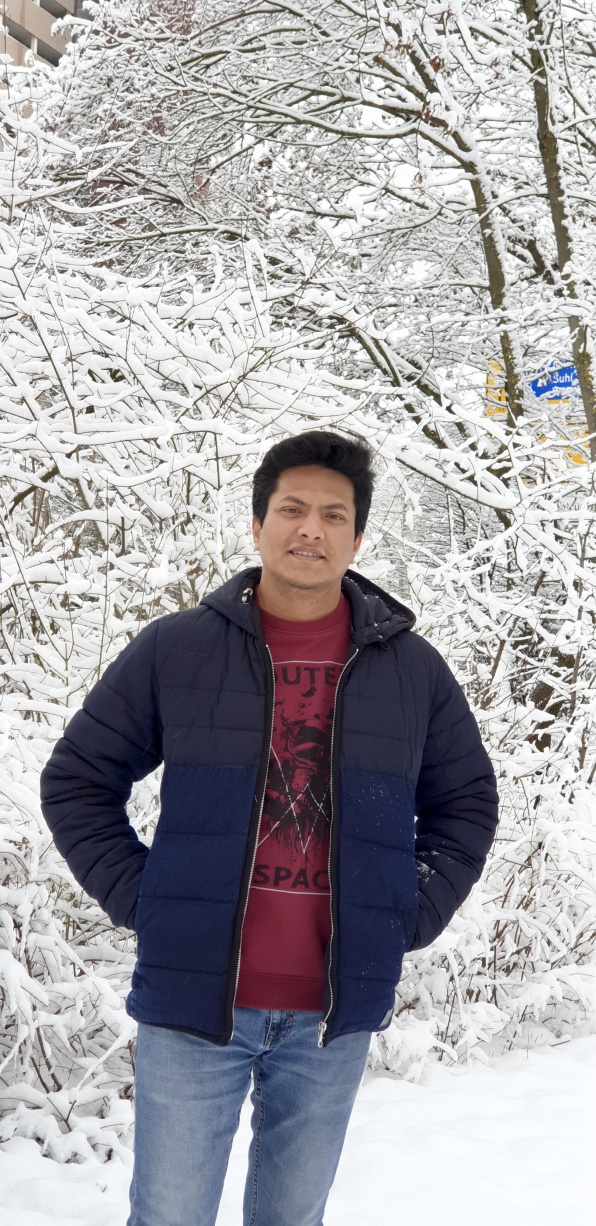
In our interview series about the people that drive IDERHA, we spotlight Early Career Community member Mostafa Kamal Mallick. Discover why Mostafa is passionate about mentoring students, his favourite movie and why he would like to have dinner with the current world leaders.
Can you share some insights into the work you are doing in IDERHA (including your affiliation and WP)? And why is your work important?
I am a researcher at Fraunhofer ISST and act as a Product Owner for ISST’s IDERHA infrastructure development team. My main focus is leading and coordinating our team’s efforts in implementing Federated Data Management and the Data Governance components of IDERHA infrastructure. Additionally, in WP3, I help translate data providers’ needs into our federated data management component.
Healthcare data often remains untapped in disconnected silos, and that limits data discovery and thus its use for effective AI algorithm development. Our work and efforts in IDERHA are important as our solution makes the data findable with a central metadata catalog. Additionally, we are developing dedicated data governance and data management components which will play a crucial role in the entire federated learning infrastructure. Altogether, our effort will enable EU cross-border healthcare data discovery and data access, which will facilitate the development of AI algorithms, and ultimately benefit patients in the future.
Looking ahead five years, what profound impact do you envision your project will have on both your personal growth and the broader landscape of your field?
My vision aligns perfectly with the Fraunhofer mission: ‘translating innovation into practice’. In five years, I envision that the IDERHA project finally bridges the 'European Paradox' and thus brings the implementation from prototype to a market ready solution. Furthermore, I hope the learnings from the challenges we are facing today while developing this infrastructure will remain as a set of standards for translating research into practical, market-ready solutions in healthcare space.
Personally, this journey has been a masterclass in the EU healthcare landscape so far, with prominent industry and academic leaders across Europe. Exchanging ideas with experts has been eye-opening, offering insights into the EU healthcare landscape, the complex data ecosystem, regulatory hurdles, and many more topics, which are not taught in universities.
If you were to deliver a TED talk, what would be the topic you'd choose, and why do you think it’s interesting enough for everyone to hear?
Europe is a powerhouse of research, but suffers from the 'European Paradox': the best ideas often die in the lab and remain on the shelf. In my TED talk, I would explore the 'Valley of Death', the gap from a prototype to a successful pilot and a commercial-ready solution. I hope this discussion will offer 'food for thought' on how focusing on user needs, stakeholder engagement, sustainability, and scalability from day one can ensure that innovation moves from concept to real-world application.
If the world of research hadn’t been your calling, what alternative career path do you think you might have taken? And why didn’t you take it?
I would likely have become a teacher and a mentor. I love teaching, specifically mathematics, and I find great joy in playing with numbers, making abstract concepts easy to understand by providing real world examples. Beyond the classroom, I am passionate about guiding high school and undergraduate students toward career decisions that truly match their interests. For the last eight years, I have dedicated my free time to volunteer in reshaping career paths for rural Indian students, most of whom are first generation learners. Even in the digital age, many of these young talents make random, unplanned career choices simply because of a lack of information and guidance that hinders their potential to shine. Talking with these students remains as the best part of my volunteering journey, and is incredibly rewarding to see brilliant minds bloom when given the right direction.
Regarding why I didn’t take it as a career, I've always believed that education and healthcare are the two key pillars that can truly change the world. By choosing Medical Engineering I had already picked one and found my way into healthcare research. The other path has never been materialized as a career, so I keep it going as a parallel ‘hobby’ project.
Share with us your ideal way to spend a day off, whether it's a thrilling adventure, a cozy retreat, or an exploration of something new and exciting.
I get a huge energy boost from talking to students and mentoring them, whether by organizing webinars on career decision frameworks, or discussing different career paths. Honestly trying to help someone find a direction is just incredibly fulfilling. That being said, to relax, I also enjoy a ‘lazy’ afternoon spent meeting friends and kind of forcing them to play board or card games.
If you could have dinner with any three individuals, living or deceased, who would they be and why?
I would choose to sit down with world leaders to talk about world peace, although I would probably need to talk to more than three leaders to serve the purpose. It’s honestly heartbreaking to see so much energy and so many resources wasted on conflict, violence, and war, when we have hundreds of real issues to fix, like achieving zero hunger, improving education and healthcare infrastructure, making the world sustainable, and so on. I would be glad to just ask them, “What if we redirected all those resources toward sustainable development for the world?”
However, on a more personal note, if I could choose only one individual, I would like to have dinner with my father. He passed away during the COVID pandemic and there are some puzzle pieces that remain scattered. I wish I could talk to him over dinner to know what exactly happened and be able to put the puzzle pieces together.
Dive into the world of science-related entertainment - what's your absolute favourite movie, TV series, or book, and why should everyone see or read it at least once?
‘3 Idiots’ is a cult-classic Indian film that follows with three engineering students in a college. While traditional education focuses on getting high grades by knowing and memorizing theoretical concepts to secure corporate jobs, the protagonist, Rancho, challenges the education system. He believes that ‘excellence’ should be the goal, not ‘success’. The movie concludes with the revelation that Rancho didn't care about grades, or degree, he just wanted the knowledge. He eventually becomes a world-renowned scientist and teacher (Phunsukh Wangdu) with hundreds of patents, running a school in a remote area that focuses on practical innovation and creative thinking of high school students. This movie is a real gem and incredibly inspiring. I have watched it multiple times and I would highly recommend it to everyone. On a related note, October Sky, and The Boy Who Harnessed the Wind, are also some of my favourite movies, which showcase the spirit of innovation and perseverance.
If you had the magical ability to master a new skill in just 24 hours, what skill would you choose and why?
I wish I could master the art of communication and leadership to better orchestrate innovation in a complex research environment, and also for day to day life and interactions. Apart from that, on a personal note, I wish I could master my German language skills in 24 hours. Do you have any suggestions for this? :D
What burning questions or topics were you secretly hoping to discuss that we haven't touched upon?
Although we have already started discussing about the long-term sustainability of IDERHA, I was still secretly hoping for a more in-depth conversation around it, especially when the European Health Data Space (EHDS) comes into action. It’s easy to build a platform in a five-year project, but it’s much harder to build a lasting, self-sustaining ecosystem. I often ask myself: 'How will our federated infrastructure evolve to become a permanent pillar of the EHDS?’ I am confident that through continued collaboration, we will figure this out over the coming years and beyond.